

3 Things To Look For in a Concealed Carry Holster (2026)
Quick answer: Look for three things in a concealed carry holster: safety and retention (molded for your exact gun, full trigger-guard coverage and secure retention), comfort and concealment (a design and ride height you can wear all day without printing) and access (a clean, repeatable draw and one-handed re-holstering). Kydex and hybrid IWB holsters meet these needs for most carriers.
Reviewed and updated October 31, 2026 by Daniel Guerra. General buying guidance; no new hands-on testing was done for this update.
| What to check | What good looks like |
|---|---|
| Fit | Made for your exact model, optic and light |
| Trigger coverage | Rigid material fully covering the trigger guard |
| Retention | Holds the gun upside down; adjustable is a plus |
| Attachment | Clips or loops that grip a stiff gun belt |
| Concealment features | Adjustable cant and ride height; a claw or wing for IWB |
| Re-holstering | Mouth stays open after the draw |
See our best concealed carry holsters, appendix holsters and Kydex vs leather vs hybrid.
Read Best Concealed Carry Holsters
A holster has three jobs: keep the gun secure and the trigger covered, stay comfortable and hidden all day, and let you draw and re-holster the same way every time. Use the checks below to judge any holster before you buy it, and again after a week of wear.
1. Safety and Retention

Made for your exact gun
A molded holster should match your pistol model and, if fitted, its optic and weapon light. Similar-looking models (a Glock 19 vs a 19X, a P365 vs a P365 XL) often need different holsters. “Universal” nylon holsters rarely hold the gun or cover the trigger as well. Check the maker’s fit list for your exact configuration.
Full, rigid trigger-guard coverage
The shell should cover the entire trigger guard and be stiff enough that nothing can press the trigger through it. Avoid soft holsters, collapsed leather, and holsters with an open trigger area. This matters most with striker-fired pistols that have no manual safety.
Retention you can adjust and test
With an unloaded gun, hold the holster upside down and shake it gently: the gun should stay put. Most Kydex holsters have a retention screw to tighten or loosen the hold. Too loose and the gun can shift or fall out when you sit or bend; too tight and the draw becomes jerky. Retention should come from the fit, not from a strap you have to remember.
2. Comfort and Concealment

- Adjustable ride height lets you raise the grip for an easier draw or drop it for better concealment.
- Adjustable cant (the tilt of the gun) helps tuck the grip against your body, especially at the 3 to 4 o’clock position.
- A claw or wing on appendix holsters levers the grip inward to reduce printing.
- A sweat guard, the raised edge between the slide and your body, keeps the gun off your skin and the rear sight from digging in.
- Smooth, rounded edges prevent hot spots on long days.
Materials trade off comfort and consistency:
| Material | Strengths | Trade-offs |
|---|---|---|
| Kydex / Boltaron | Consistent retention, stays open for re-holstering, thin, easy to clean | Stiffer against the body; edges can rub if poorly finished |
| Leather | Quiet, conforms to the body over time, traditional look | Can soften and collapse at the mouth with age; needs care; retention can loosen |
| Hybrid | Rigid shell plus a soft backer spreads weight and is often more comfortable | Bulkier; the backer can hold sweat; some are harder to re-holster one-handed |
For a deeper comparison, see Kydex vs leather vs hybrid holsters.
3. Access and Draw

You should be able to get a full firing grip while the gun is still in the holster. If the grip sits too deep against your body, or the holster pushes the gun so low that your fingers cannot wrap the grip, the draw will be slow and inconsistent.
- Clearance around the grip for your whole hand, including the support-hand thumb if you shoot with a thumbs-forward grip.
- A smooth release once you have a firm grip, with no rocking or wiggling needed.
- An open mouth after the draw so you can re-holster with one hand, slowly, without pushing fabric into the holster.
- Solid belt attachment. Clips or loops should grip a stiff gun belt so the holster stays in the belt when you draw. Tuckable clips let you tuck a shirt over the holster.
Position matters as much as the holster. Appendix and strong-side IWB are the most common for concealed carry; OWB is the most comfortable and easiest to reach but harder to hide. See our concealed carry positions guide.
Quick Checklist Before You Buy
- Exact fit for your model, optic and light.
- Rigid shell that fully covers the trigger guard.
- Adjustable retention that passes the upside-down test.
- Ride height and cant you can adjust for your body.
- Belt attachment that matches your belt width.
- A return or exchange policy, in case the fit or comfort is wrong.
Two model-specific Kydex IWB options that meet these points:


Related reading: We The People IWB vs CrossBreed Rogue: Features and Total Cost · We The People Holsters Review · When Should You Replace a Concealed Carry Holster? · 7 Common Concealed Carry Mistakes (and How To Fix Them)
Concealed Carry Holster FAQ
What makes a holster safe?
It is molded for your exact gun, rigidly covers the entire trigger guard, holds the gun securely and keeps its mouth open for re-holstering.
Kydex or leather for a carry holster?
Kydex is the most popular for consistent retention and easy re-holstering. Leather is comfortable and quiet but can soften over time. Hybrids combine a Kydex shell with a soft backer.
What is holster cant?
The angle the gun sits at on your belt. A forward cant at 3 to 4 o’clock can tuck the grip and make the draw more natural.
Do I need a gun belt for my holster?
Yes. A stiff gun belt keeps the holster stable, reduces sagging and improves concealment.
Conclusion
The best holster is safe first: molded for your exact gun with a rigid, fully covered trigger guard and secure retention. After that, choose the design, material and position that let you carry comfortably every day and draw the same way every time. Pair it with a stiff gun belt, and give any new holster a week of real wear before deciding.
Brands we cover in more detail, compared in our best concealed carry holsters guide:


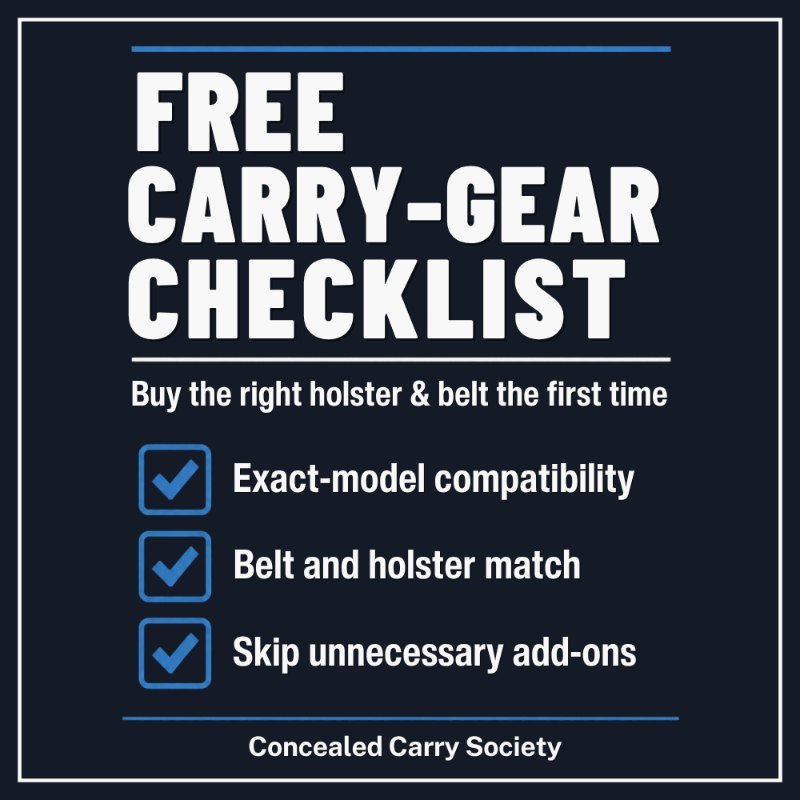
Buying a holster or belt? Get our free carry-gear checklist by email and order gear that fits your exact setup the first time.
Free. Unsubscribe anytime.


