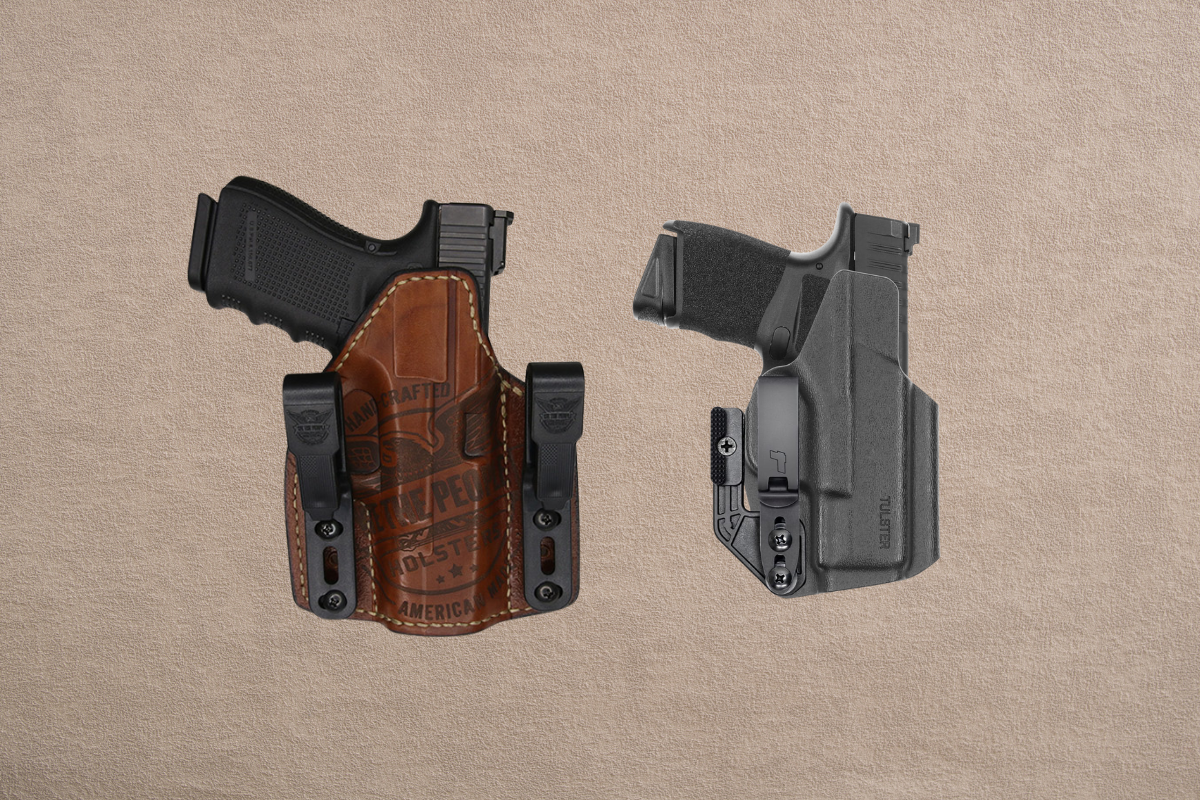
When Should You Replace a Concealed Carry Holster?
A concealed carry holster can last for years, but daily use eventually takes a toll on even well-made gear. You should replace your holster when it no longer protects the trigger, holds the handgun securely, stays attached to your belt, or allows a consistent draw.
There is no standard replacement schedule, so condition matters more than age. Regular inspections can uncover cracks, weakened retention, worn hardware, and fit problems before they affect safe daily carry.
How Long Does a Concealed Carry Holster Last?
A concealed carry holster can last anywhere from a short period of heavy use to many years. Material, construction, carry frequency, and exposure to heat or moisture all affect its useful life.
Factors that can accelerate holster wear include:
- Carrying every day
- Frequent dry-fire and live-fire practice
- Sweat, humidity, rain, and dirt
- Leaving the holster in a hot vehicle
- Repeated pressure from sitting or bending
- A heavy handgun or weapon-mounted accessories
- Loose clips, screws, or mounting hardware
A quality Kydex or leather holster may provide years of service without becoming unsafe. An expensive holster can still crack, stretch, or develop hardware problems, so brand and age should not replace a physical inspection.
There is no need to discard a safe, functional holster simply because it has reached a certain age. Replace it when wear affects one of its essential functions.
What Are the Signs a Concealed Carry Holster Needs Replacing?
A few surface scratches or worn finish marks do not usually make a holster unsafe. Problems with retention, trigger protection, structure, or attachment are more serious.
1. The Holster No Longer Holds the Handgun Securely
A properly fitted holster should keep the handgun seated during normal movement. The gun should not work its way upward, shift excessively, or come free when you walk, bend, or get out of a vehicle.
Loose retention does not always require a new holster. Many Kydex and hybrid models have retention screws that can be adjusted. Check the screws and rubber spacers, make a small adjustment, and test the fit again with an unloaded firearm.
Replace the holster when:
- Retention remains weak after adjustment
- The gun moves excessively inside the holster
- Retention changes from one draw to the next
- Worn or stretched material no longer holds the gun
- Damaged hardware cannot maintain the desired setting
Test the holster with the exact handgun and accessories used for concealed carry. A fit test with a similar model will not confirm proper retention.
2. The Trigger Guard Is No Longer Protected
A concealed carry holster should prevent fingers, clothing, drawstrings, and other objects from reaching the trigger while the handgun is seated.
Stop using the holster if its material has warped, stretched, cracked, or collapsed around the trigger guard. Soft material should not be able to fold inward and press against the trigger.
According to the USCCA’s guidance on choosing a holster, the holster body should fully cover the trigger guard and be molded for the individual handgun.
Some light-bearing holsters have a wider opening near the trigger guard because the weapon light is wider than the gun’s frame. Seeing a small gap does not prove that the holster is unsafe. The concern is an opening large enough to let a finger or object enter and operate the trigger.
If you cannot determine whether that opening is acceptable, stop using the holster and contact its manufacturer.
3. The Holster Is Cracked, Warped, or Collapsing
Inspect the entire holster body, paying close attention to areas that flex or support hardware.
On Kydex and molded polymer holsters, look around:
- Belt-clip mounting points
- Retention screws and spacers
- Folds and sharp corners
- Trigger-guard molding
- Holster edges
- Mounting holes
Light surface scratches are generally cosmetic. A crack running through the material is a structural problem, especially when it starts near a clip or mounting screw. Continued movement can cause the crack to spread.
Leather holsters require a different inspection. Look for stretching, deep creases, softened areas, damaged stitching, and a mouth that collapses after the handgun is drawn.
Nylon and fabric holsters should be checked for torn seams, thinning material, damaged straps, and loss of structure. Retire a soft holster if it can fold into the trigger guard or no longer holds the gun in a consistent position.
4. The Belt Clip or Attachment System Is Failing
Your holster should stay attached to your belt when you draw. If the holster comes out with the handgun, access can be delayed and the trigger may remain covered when you need to fire.
Inspect the complete attachment system for:
- Cracked or bent clips
- Loose or missing screws
- Torn belt loops
- Broken snaps
- Damaged stitching
- Stripped mounting holes
- Movement around attachment points
A removable clip or belt loop can often be replaced if its mounting point remains intact. Replace the full holster if the material around that mounting point has cracked, stretched, or torn.
Also confirm that the clip matches your belt. A clip designed for a 1.5-inch belt may not secure properly to a thinner belt or directly to a waistband.
5. The Retention Screws Will Not Stay Tight
Daily movement can gradually loosen retention and mounting screws. If you notice a change in fit, examine the screws, threaded posts, and rubber spacers.
Approved replacement hardware may correct the problem. Follow the holster manufacturer’s instructions when installing parts or applying thread-locking products. Permanent compounds can prevent future adjustment and may make damaged hardware harder to remove.
A new holster may be necessary when:
- A screw turns without tightening
- Threads are stripped
- A mounting hole has cracked or enlarged
- A spacer repeatedly slips out of position
- The retention setting changes during normal carry
Marking the position of adjustment screws with a small witness mark can make movement easier to spot during later inspections.
6. Drawing or Reholstering Has Become Inconsistent
Changes in the draw can reveal wear that is not obvious during a visual inspection. The handgun may snag, bind, or release at a different point from one draw to the next.
Before blaming the holster, check for other causes:
- A loose or different carry belt
- Clothing catching on the grip or holster
- A change in carry position
- Incorrect retention adjustment
- A newly installed optic or weapon light
- Debris inside the holster
A sound holster should release the gun consistently during a controlled draw and remain attached to the belt.
Its mouth should also remain open enough for careful reholstering. Do not use the handgun’s muzzle to force collapsed leather or fabric open. Remove the holster first or replace it if it no longer maintains the structure required for safe use.
There is rarely a reason to reholster quickly. Confirm that clothing and other objects are clear, then return the handgun slowly while watching the holster when possible.
7. Your Firearm or Accessory Setup Has Changed
Holsters are commonly designed around a specific handgun configuration. Changing the gun, weapon light, laser, optic, threaded barrel, or controls may affect fit and retention.
Light-bearing holsters deserve particular attention because many retain the firearm around a specific light. A different light may require a new holster even when it attaches to the same handgun.
Manufacturers such as Safariland use details including firearm model, caliber, barrel length, optic, and weapon light to determine holster compatibility. Check the manufacturer’s fit information rather than assuming that a similar configuration will work.
Do not force a modified handgun into an incompatible holster. Avoid cutting, heating, or reshaping a carry holster unless the manufacturer approves that modification.
Should You Repair or Replace a Worn Holster?
Replaceable hardware does not always justify buying a new holster. Cracks, trigger-access problems, and loss of structure are more difficult to correct reliably.
The following table provides a quick guide:
| Problem | Recommended action |
|---|---|
| Loose retention screw | Adjust and retest |
| Worn rubber spacer | Install an approved replacement |
| Broken removable clip | Replace if its mount is intact |
| Damaged mounting point | Replace the holster |
| Cracked or warped body | Replace the holster |
| Accessible trigger | Stop using immediately |
| Collapsed leather or fabric | Replace or contact the maker |
| Changed gun or light | Use a compatible holster |
Check the manufacturer’s warranty before attempting a repair. Many established holster companies offer replacement hardware or will inspect photographs of suspected damage.
Replacing a clip, screw, or spacer can restore normal function when the holster body remains sound. Glue, tape, or a homemade patch should not be relied upon to repair a structural crack in an everyday carry holster.
How Should You Inspect a Concealed Carry Holster?
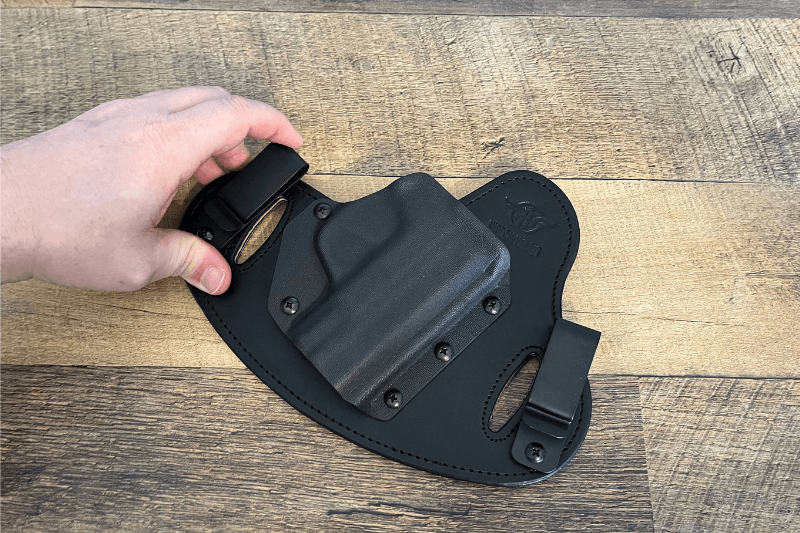
A basic holster inspection takes only a few minutes.
- Unload the handgun completely and move all ammunition away from the inspection area.
- Examine the holster body for cracks, warping, stretching, soft spots, and damaged stitching.
- Confirm that the trigger guard remains protected from fingers and objects.
- Inspect every clip, loop, snap, screw, post, and spacer.
- Insert the unloaded handgun and check fit, retention, and compatibility.
- Attach the holster to your normal belt and perform several slow, controlled draws.
The holster should stay attached and release the gun at the same point during each draw. Stop testing if you discover a crack, accessible trigger, failed attachment point, or other safety-related problem.
A quick visual check makes sense whenever you remove the handgun. Conduct a closer inspection after:
- A live-fire or dry-fire training session
- Dropping or striking the holster
- Exposure to rain or heavy sweat
- Changing retention or mounting hardware
- Installing a firearm accessory
- Noticing a change in fit or draw
When Should You Stop Carrying With a Damaged Holster?
Stop carrying with the holster immediately if the trigger is accessible, the handgun is not retained, the attachment system fails, or structural damage affects drawing and reholstering.
Do not carry with questionable equipment while waiting for replacement parts. Use another undamaged holster made for your exact firearm and accessory configuration.
Common Questions About Replacing a Concealed Carry Holster
Do Kydex holsters wear out?
Yes. Kydex can crack, warp, or lose retention over time. Clip mounting points, retention hardware, and areas that flex during use are common places to find damage.
How often should you replace a concealed carry holster?
There is no fixed replacement interval. Inspect it regularly and replace it when wear affects trigger protection, retention, attachment, or access.
Should you replace a holster when retention becomes loose?
Not automatically. Adjustable retention may only need tightening or new hardware. Replace the holster if adjustment cannot restore a secure and consistent fit.
Can a leather holster last a lifetime?
A quality leather holster can last many years with proper care. It should be retired if it stretches, collapses, exposes the trigger, or stops retaining the handgun securely.
Can you repair a cracked Kydex holster?
A Kydex holster with a structural crack should generally be replaced. Glue or other home repairs do not restore the material to its original strength.
Do you need a new holster after changing weapon lights?
Usually. Many light-bearing holsters are molded for a specific handgun-and-light combination. Confirm compatibility with the manufacturer before carrying.
How Do You Know When It Is Time to Replace Your Holster?
Age alone does not determine when a concealed carry holster needs replacing. Its condition and performance are what count.
A serviceable holster must protect the trigger, retain the handgun, stay firmly attached, and allow consistent access. If damage prevents it from doing any of those jobs, remove it from your carry setup and replace it.
Read the following for more info: