3 Things To Look For in a Concealed Carry Belt (2026)
Quick answer: Look for three things in a concealed carry belt: strength and rigidity (a reinforced leather or stiffened nylon belt that will not sag under the gun), support and stability (about 1.5 inches wide to match most holster clips, thick enough to stop the holster from tipping) and comfort and adjustability (fine size adjustment for sitting, eating and seasonal clothing).
Reviewed and updated October 31, 2026 by Daniel Guerra. General guidance; no new hands-on testing was done for this update.
| What to check | What good looks like |
|---|---|
| Stiffness | Internal reinforcement (steel, polymer or double-layer leather) |
| Width | About 1.5 inches to fit most holster clips and loops |
| Adjustment | Ratchet or micro-adjust systems, or multiple holes on leather |
| Buckle | Low-profile buckle that does not dig in or print |
| Sizing | Follow the maker’s guide; many say waist plus about 2 inches for IWB |
Compare our best concealed carry gun belts, Kore vs Nexbelt and leather vs nylon belts.
Read Best Concealed Carry Gun Belts
A gun belt is the base of the whole carry setup. If it sags or twists, the holster tips, the gun prints and the draw becomes inconsistent. These three checks apply whether you carry IWB, OWB or appendix.
1. Strength and Rigidity

The belt has to hold the weight of the gun and holster all day without sagging or stretching. Standard department-store belts are not built for that.
- Material: double-layer, reinforced leather or heavy nylon with a stiffened core.
- Core: internal reinforcement (polymer or steel) keeps the belt from folding under the holster.
- Quick check: hold the belt by one end. If it droops sharply, it is too soft for carry.
- Hardware: a steel or aluminum buckle and solid stitching. Cheap buckles loosen and weak stitching fails with daily wear.
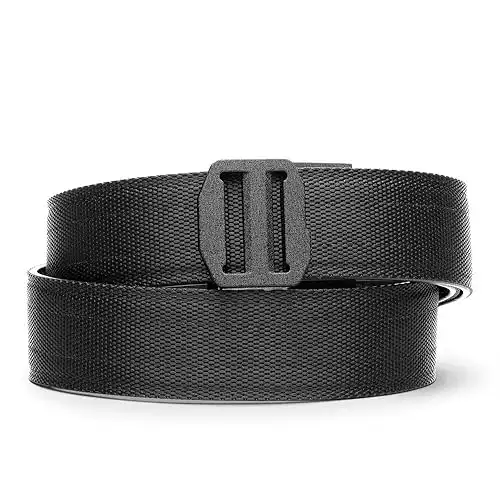
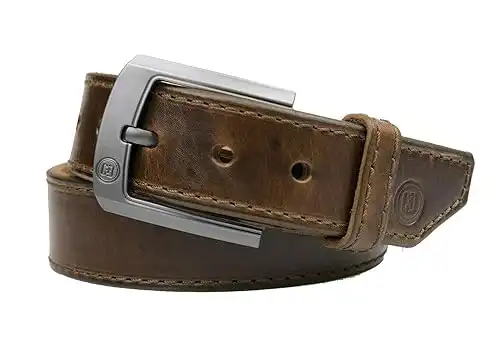
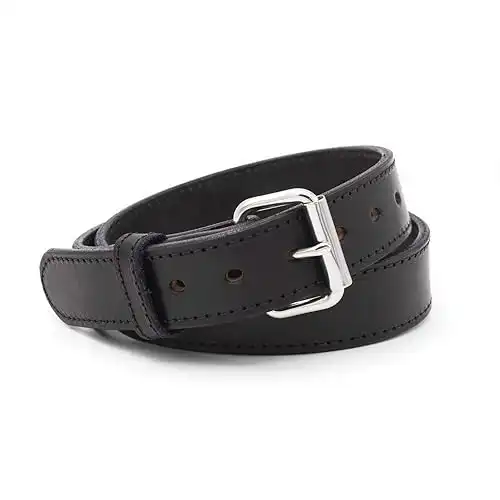
Brands built specifically for carry include Kore Essentials (ratchet belts), CrossBreed (leather and reinforced nylon), We The People and Relentless Tactical (thick leather). Compare current picks below and in our best concealed carry gun belts guide.

2. Support and Stability
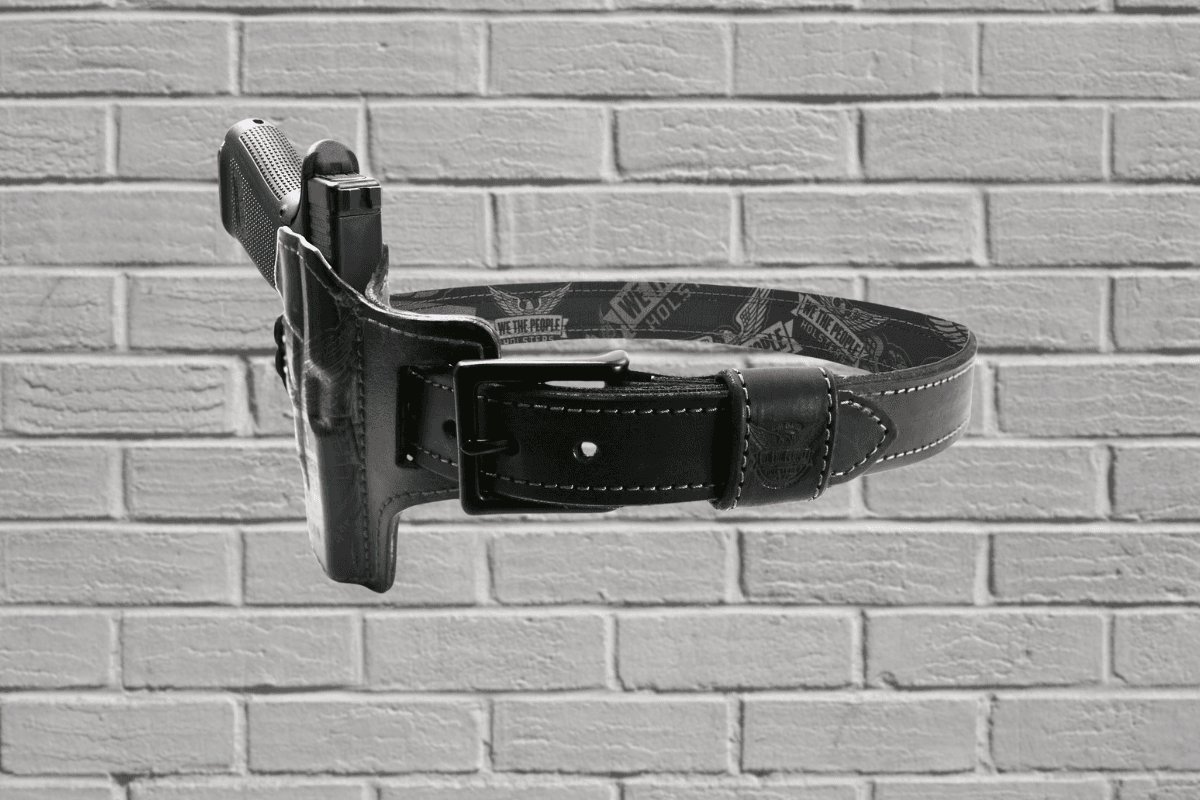
Support is what keeps the gun in the same spot whether you are sitting, walking or bending over.
- Width: about 1.5 inches fits most holster clips and loops. Some holsters accept 1.75 inches; check yours.
- Thickness and stiffness: enough to resist the holster tipping outward, which is the main cause of printing.
- Weight distribution: a reinforced belt spreads the load of the gun and spare magazine across the waist so one side does not dip.
3. Comfort and Adjustability
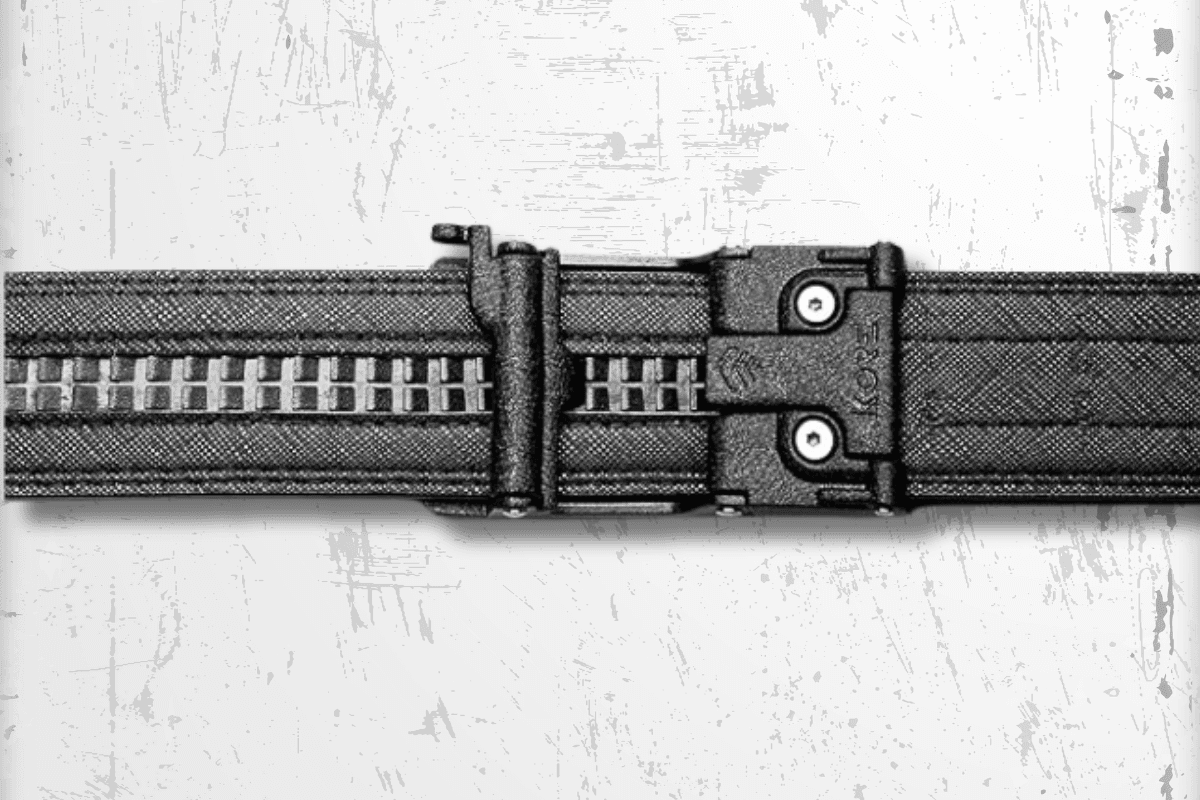
Your waist changes through the day and with what you carry, so fine adjustment matters as much as stiffness.
- Flexibility: stiff enough to support the gun but not so rigid it digs in when you sit. Leather breaks in over time; cored nylon flexes from day one.
- Micro-adjustment: ratchet belts adjust in small steps instead of one-inch holes. Hook-and-loop belts also adjust quickly.
- Buckle: low profile, so it does not add bulk or press into you during appendix carry.
- Sizing: many makers recommend about 2 inches over pants size for IWB. Use the specific maker’s sizing guide.
Leather vs. Nylon Gun Belts
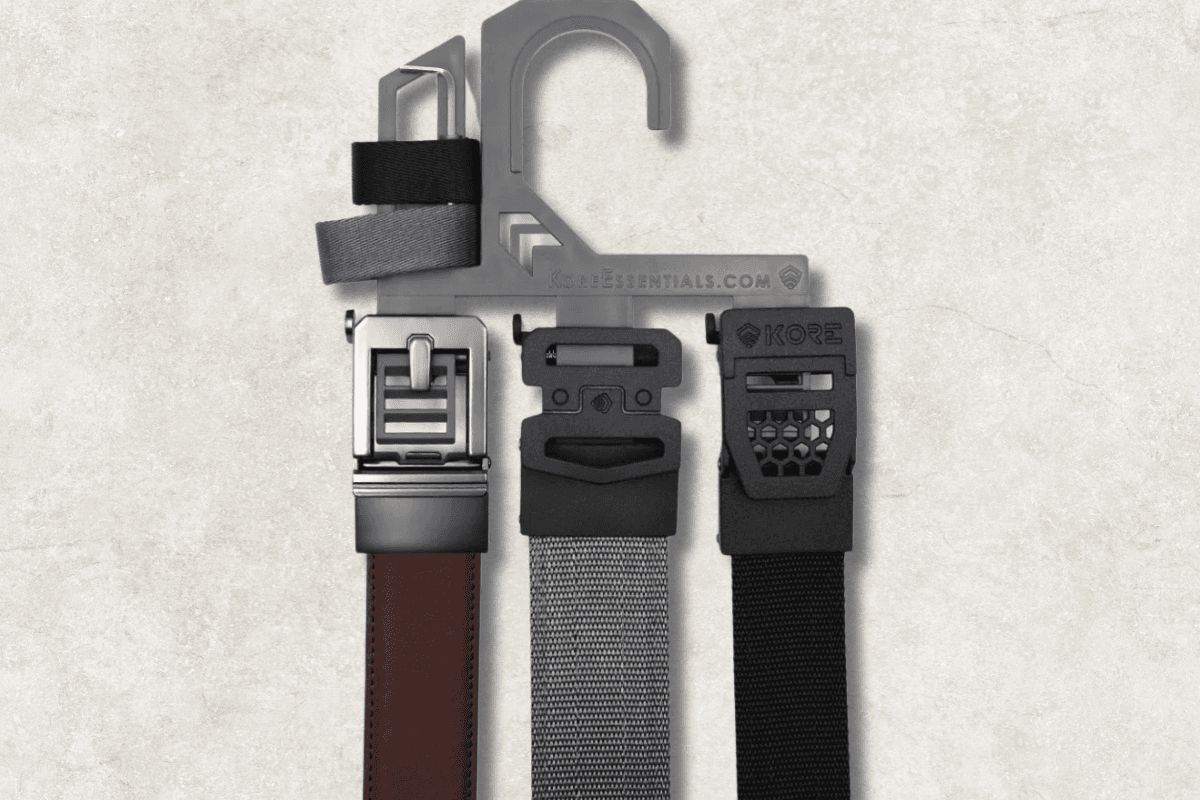
Both work if they are built for carry. Leather is dressier and blends in with everyday clothing; nylon ratchet belts are lighter and adjust more precisely but look more tactical. See leather vs nylon gun belts and Kore vs Nexbelt for detail.
| Feature | Leather | Nylon (reinforced) |
|---|---|---|
| Support | Good; can soften over years | Strong, consistent stiffness |
| Adjustment | Belt holes | Ratchet or hook-and-loop micro-adjust |
| Comfort | Comfortable once broken in | Light and flexible from day one |
| Durability | Long-lasting; can stretch | Resists stretching |
| Look | Classic; works with dress clothes | Casual or tactical |
| Best for | Blending in with normal or office clothing | All-day support and fine adjustment |
Other Details Worth Checking
- Pant loops: wider belts may not fit dress pants.
- Reinforcement type: polymer cores are lighter; steel cores are stiffer.
- Price vs. quality: cheap belts tend to wear out or sag quickly, which costs more over time.
- Holster match: make sure the holster clips fit the belt width and thickness.
Related reading: Do You Need a Concealed Carry Belt?
Concealed Carry Belt FAQ
Do you need a special belt for concealed carry?
Yes. A regular dress belt usually sags and lets the holster tip, which hurts comfort and concealment. A reinforced gun belt keeps the gun stable.
What width should a gun belt be?
About 1.5 inches fits most holster clips and loops. Some holsters also accept 1.75-inch belts; check your holster.
How should a gun belt fit?
Many makers recommend ordering about 2 inches over your pants size for IWB carry. Always use the specific maker’s sizing guide.
Is a leather or nylon gun belt better?
Leather looks dressier and lasts with care; nylon ratchet belts adjust in small steps and are usually lighter. Both work if properly reinforced.
Conclusion
Pick a belt made for concealed carry that is rigid, about 1.5 inches wide and easy to adjust in small steps. Choose leather for a dressier look or reinforced nylon for lighter weight and finer adjustment. A regular dress belt will not hold a holster steady.
Buying a holster or belt? Get our free carry-gear checklist by email and order gear that fits your exact setup the first time.
Free. Unsubscribe anytime.