
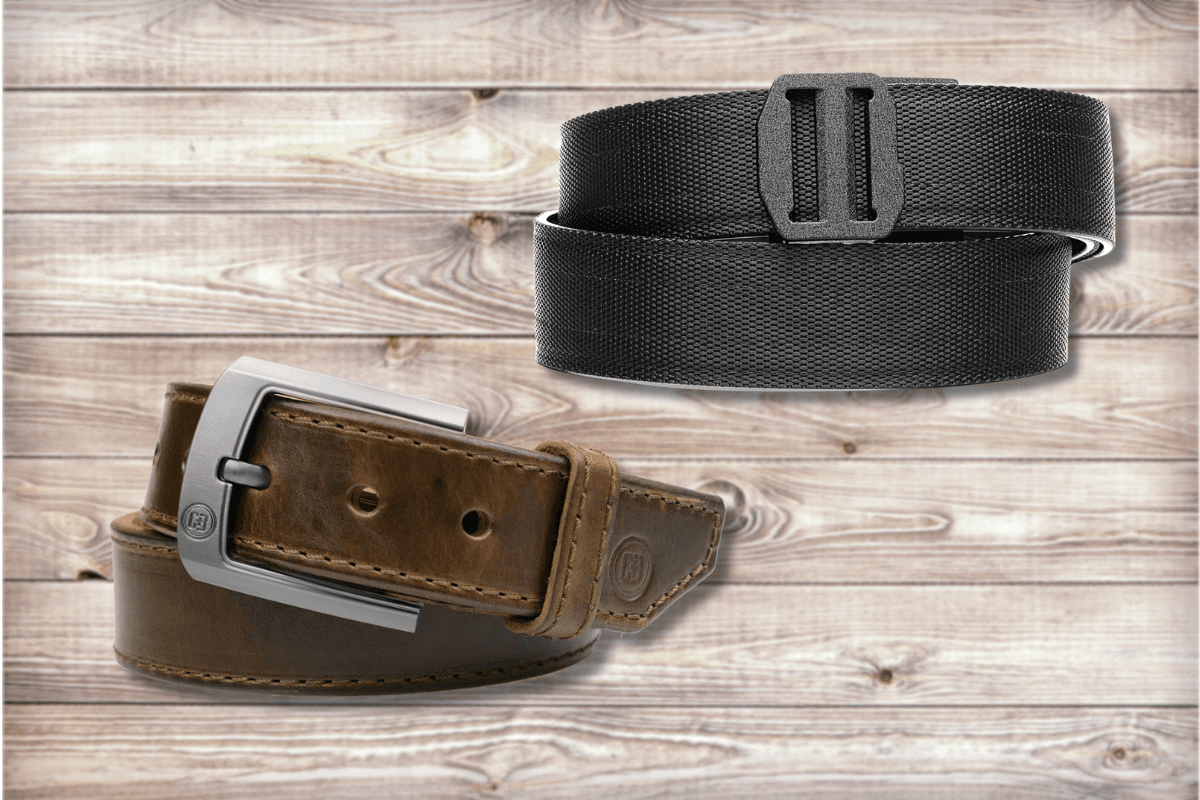
Do You Need a Concealed Carry Belt? (2026)
Quick answer: Yes — if you carry on your waistband, you need a dedicated gun belt. A regular dress or fashion belt bends under a pistol’s weight, letting the holster sag, tip outward and print. A reinforced gun belt keeps the holster tight to your body, improves comfort over a full day, makes the draw consistent and keeps the holster in place when you draw.
Reviewed and updated October 31, 2026 by Daniel Guerra. General guidance; no new hands-on testing was done for this update.
| Feature | Gun belt vs regular belt |
|---|---|
| Stiffness | Reinforced core vs bends under load |
| Holster stability | Holds the holster upright vs lets it sag and tip |
| Concealment | Pulls the grip in vs lets the grip flop out and print |
| Comfort | Spreads the weight vs pressure points and constant re-tightening |
| Draw | Holster stays put vs holster may come out with the gun |
Compare our best concealed carry belts, best women’s carry belts and Kore vs Nexbelt.
Read Best Concealed Carry Belts
Why a Gun Belt Matters
If you carry on your waistband, the belt is what holds the holster. A regular belt flexes under a loaded pistol, so the holster sags, tips the grip out and prints, and you end up re-tightening all day. A gun belt is built stiff enough to carry that load.
- Stability: the holster stays at the same height and angle all day.
- Concealment: a stiff belt pulls the grip in toward your body.
- Comfort: weight spreads across your waist instead of one pressure point.
- Safer draw: the holster stays put when the gun comes out.
- Durability: reinforced belts hold their shape for years where regular belts deform.
How a Gun Belt Differs From a Regular Belt
- Reinforcement: double-layer leather, or nylon with a polymer or steel core.
- Width and thickness: usually 1.5 inches wide to fit holster clips, and thicker than a dress belt.
- Hardware: heavy-duty buckles and stitching.
- Adjustment: ratchet or fine-hole systems for small changes when sitting, eating or switching holsters.
What Changes When You Switch
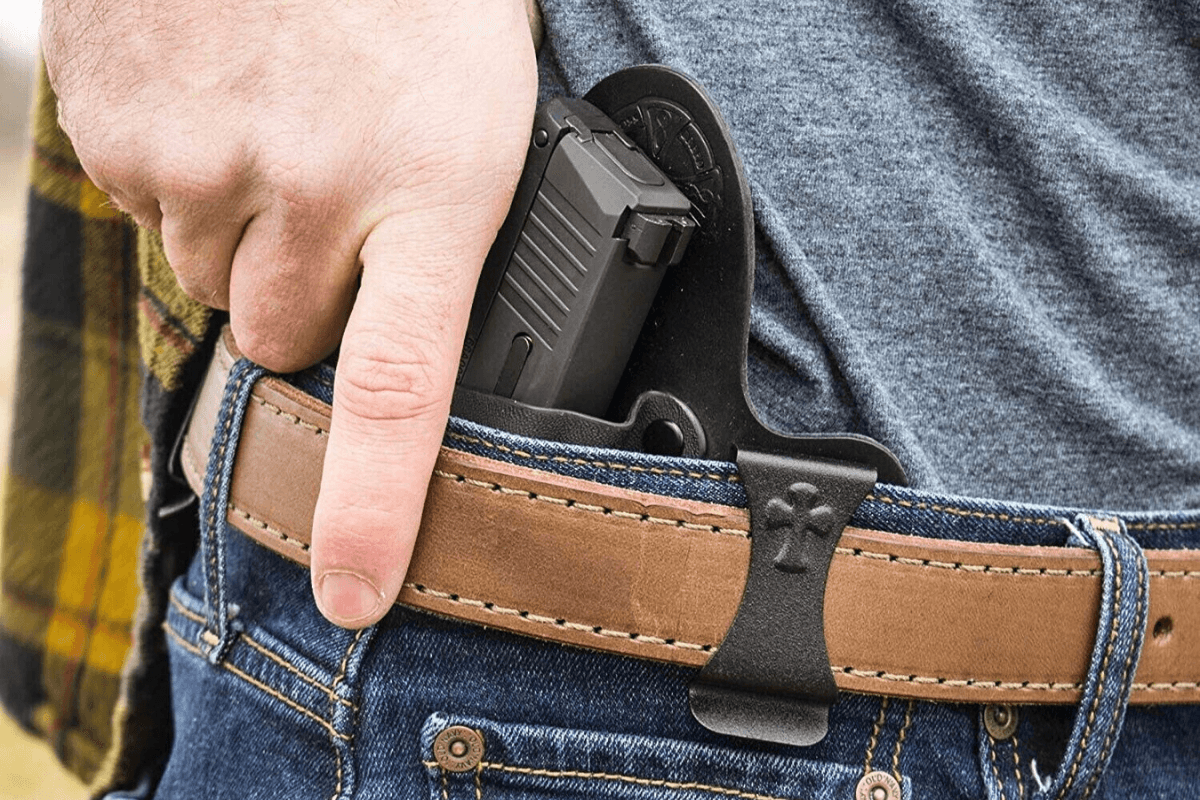
The difference is usually obvious on day one. Earlier versions of this article described the founder switching from a standard leather work belt that sagged and needed constant adjusting; a reinforced gun belt kept the gun in place, felt more comfortable and lasted years without deforming.
How To Choose a Gun Belt
- Material: leather is dressier; reinforced nylon is lighter and adjusts more finely. See leather vs nylon gun belts.
- Width: match your holster clips, usually 1.5 inches.
- Buckle: low-profile so it does not dig in or print, especially for appendix carry.
- Adjustment: ratchet belts adjust in small steps; leather relies on hole spacing.
- Sizing: many makers recommend about 2 inches over pants size for IWB. Follow the maker’s guide. See what to look for in a carry belt.
Popular Gun Belt Brands
- Kore Essentials: ratchet belts with fine adjustment and reinforced construction. See Kore vs Nexbelt.
- CrossBreed: leather and reinforced nylon belts made for carry.
- We The People: leather and nylon carry belts that pair with its holsters.
- Relentless Tactical: thick, made-in-USA leather belts.
Current picks:
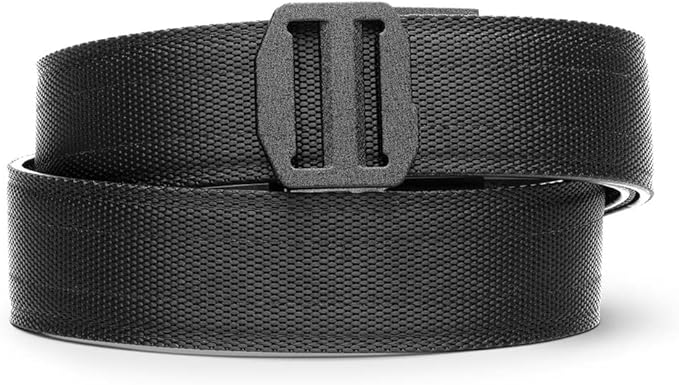
Reinforced ratchet belt with small fit adjustments. Specifications depend on the selected strap and buckle: nylon and leather models have different load ratings and size ranges. Follow the exact model’s sizing instructions before trimming.

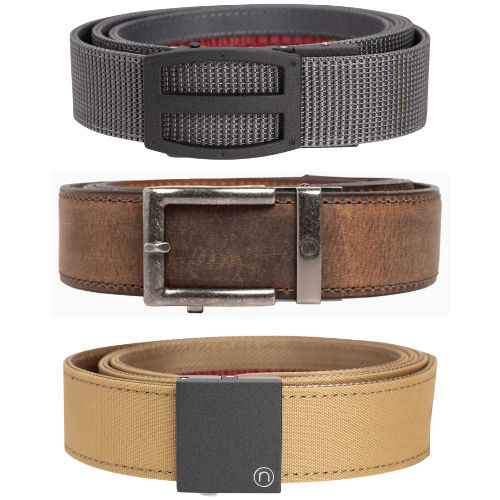
Top-grain leather with woven nylon reinforcement. Available in 1.25-inch and 1.5-inch widths; approximately 1/4-inch thick. Seven holes spaced 1 inch apart. CrossBreed’s lifetime warranty excludes belts; check the current trial and resizing terms.

Alternatives If You Cannot Wear a Belt
- Belly bands: work with athletic and belt-less clothing; see belly band holsters.
- Pocket holsters: for small guns in deep front pockets; see how to pocket carry.
- Ankle holsters: deep concealment for small backup guns, with a slower draw.
- Shoulder holsters: comfortable seated, but need a cover garment and careful muzzle awareness.
- Beltless clip holsters: some IWB holsters have clips designed to grip the waistband without a belt; they are less stable than a holster on a gun belt.
Related reading: 7 Tips for Comfortable Concealed Carry · 3 Things To Look For in a Concealed Carry Belt
Concealed Carry Belt FAQ
Can you conceal carry without a gun belt?
You can with a belly band, pocket holster or off-body bag, but waistband holsters work far better on a stiff gun belt.
What is the difference between a gun belt and a regular belt?
A gun belt has a reinforced core (steel, polymer or double-layer leather) so it stays rigid under a holster’s weight; a regular belt does not.
Do I need a gun belt for a small pistol?
It still helps. Even a light pistol shifts and prints on a flimsy belt.
What size gun belt should I buy?
Follow the maker’s guide; many recommend about 2 inches over your pants waist size for IWB carry.
Conclusion
Read the Ultimate Guide To Concealed Carry
Yes, you need a gun belt if you carry on your waistband. A reinforced belt keeps the holster stable, helps concealment and makes all-day carry comfortable. Choose leather or reinforced nylon in the right width and size, and use an alternative such as a belly band only when a belt is not practical.


