How Often Should You Replace Your Concealed Carry Ammo?
Most concealed carriers should replace their defensive ammunition every 6 to 12 months. Replace it sooner if it has been repeatedly chambered, exposed to moisture or chemicals, or shows corrosion, bullet setback, or damage.
This is a maintenance interval, not an expiration date. Properly stored ammunition can remain functional for decades.
How Often Should Concealed Carry Ammo Be Replaced?
A six-month replacement schedule is a cautious choice for daily carriers, especially in hot or humid climates. Replacing it once a year is reasonable when the ammunition stays dry, the firearm is rarely unloaded, and every cartridge passes regular inspection.
Winchester recommends replacing concealed carry ammunition annually. Lucky Gunner also contacted several major ammunition manufacturers while researching the subject and reported a specific recommendation of six months for duty ammunition.
Use the following intervals as a starting point:
| Situation | Replace ammo |
|---|---|
| Normal daily carry | Every 6–12 months |
| Hot, humid, or wet conditions | About every 6 months |
| Frequent rechambering | Inspect often; replace sooner |
| Water, oil, or solvent exposure | Inspect immediately |
| Corrosion, damage, or setback | Remove immediately |
| Properly stored ammunition | Inspect before use |
Your own schedule may need to be shorter. A construction worker carrying outside in Louisiana exposes ammunition to different conditions than someone working in a climate-controlled office in Arizona.
Why Carry Ammo Ages Differently Than Stored Ammo
A cartridge does not wear out simply because it reaches a certain age. Its condition depends largely on storage, exposure, and handling.
Ammunition kept in a cool, dry location inside its original packaging is protected from most environmental threats. Carry ammunition may encounter those threats every day.
Perspiration and Humidity
Inside-the-waistband carry places the handgun close to body heat and perspiration. Pocket carry adds lint and debris to the mix. Moisture can eventually cause corrosion around the cartridge case or primer, particularly in humid and coastal environments.
Modern defensive ammunition is designed to tolerate ordinary carry conditions. That does not make it immune to months of moisture exposure.
Gun Oil and Cleaning Solvents
Oil and solvent should be kept away from ammunition. Contamination around the primer or case can make a defensive cartridge less trustworthy, even when no damage is visible.
Remove all ammunition before cleaning your handgun, following the unloading procedure in the owner’s manual. Keep loose cartridges away from the cleaning area and wipe away excess lubricant before reloading.
Repeated Handling
The top cartridge in a magazine receives more handling than the rounds beneath it. It may be removed, reloaded, and pressed against the magazine’s feed lips many times.
The chambered cartridge faces even more stress. Each trip along the feed ramp can leave scratches, deform the case, or push the bullet farther into the case.
When Should You Replace the Chambered Round?
Inspect the chambered round every time you unload your carry gun. Remove it from defensive service if you find corrosion, case damage, contamination, or a change in the bullet’s position.
Avoid repeatedly loading the same cartridge into the chamber. No single number of chamberings is safe for every combination of handgun and ammunition. Feed-ramp angles, recoil spring strength, bullet shape, and cartridge construction all affect the amount of stress placed on the round.
Cycling several cartridges through the chamber is not a reliable solution. It spreads the wear across multiple rounds and makes it difficult to track how often each one has been chambered.
If you frequently unload your handgun for dry practice, cleaning, or storage, examine the chambered cartridge closely before loading it again.
What Is Bullet Setback?
Bullet setback occurs when the bullet is pushed deeper into its cartridge case. Repeated chambering is one of its most common causes in defensive handguns.
Pushing the bullet deeper reduces the internal space inside the case. Significant setback can increase pressure when the cartridge is fired. A visibly shortened cartridge should not be carried or fired.
Compare the questionable round with a new cartridge from the same manufacturer, caliber, product line, and bullet weight. Place both on a flat surface and look at their overall length. Comparing two different loads is unreliable because bullet profiles and normal cartridge lengths vary.
Set the cartridge aside if the bullet sits noticeably deeper or appears loose or crooked. Do not fire it as range ammunition.
Signs That Carry Ammo Should Be Replaced
Remove a cartridge from service when you find:
- A bullet seated deeper than matching cartridges
- A loose or crooked bullet
- Cracks or deep dents in the case
- Significant case deformation
- Corrosion around the case or primer
- Heavy discoloration associated with moisture
- A damaged case rim
- A damaged or improperly seated primer
- Suspected exposure to water, oil, or solvent
Light scratches from normal feeding do not automatically make a cartridge unsafe. The concern is meaningful damage, contamination, or any physical change that could affect feeding, chambering, pressure, or ignition.
Do not fire badly damaged, corroded, contaminated, or visibly set-back ammunition to dispose of it. Contact the ammunition manufacturer, a qualified firearms professional, or a local shooting range for disposal guidance.
How to Inspect Your Concealed Carry Ammo
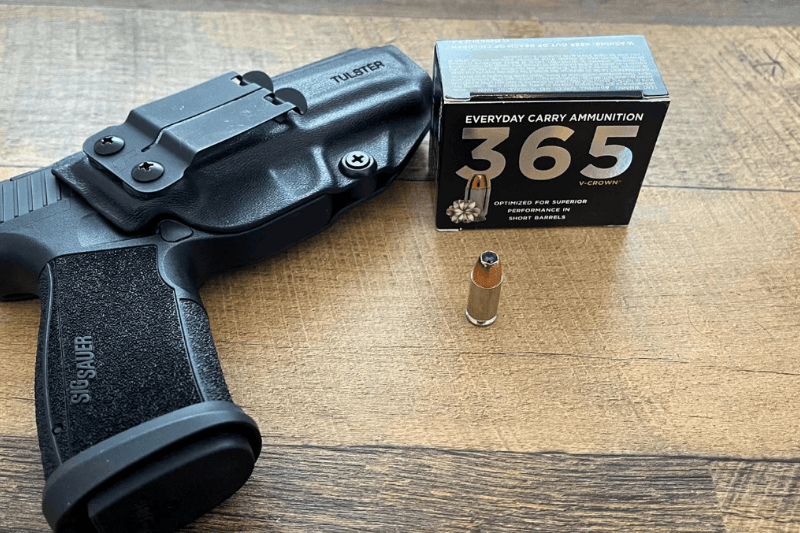
Conduct the inspection in a well-lit area with the muzzle pointed in a safe direction. Follow your firearm manufacturer’s unloading instructions.
- Remove the magazine. Take it out before clearing the chamber.
- Clear the handgun. Visually and physically confirm that the chamber is empty.
- Separate the firearm and ammunition. Place the unloaded handgun away from the cartridges during the inspection.
- Examine the chambered round. Check the bullet, case, rim, and primer.
- Inspect the remaining cartridges. Pay close attention to ammunition near the top of the magazine.
- Check the magazine. Look for moisture, rust, debris, damaged feed lips, and base-plate damage.
- Compare suspicious cartridges. Use a new round from the exact same defensive load as your reference.
Monthly inspections are appropriate for a handgun carried daily. Check the ammunition immediately after exposure to heavy rain, perspiration, flooding, or cleaning chemicals.
A 6-to-12-Month Carry Ammo Rotation
Choose one or two dates each year for replacing your carry ammunition. Pairing the rotation with a birthday, permit renewal date, or scheduled training session makes it easier to remember.
At each rotation:
- Inspect the cartridges before taking them to the range.
- Fire only ammunition that shows no setback, corrosion, contamination, or damage.
- Confirm that the defensive load feeds and cycles reliably.
- Inspect and clean the magazines according to the manufacturer’s instructions.
- Load the handgun and spare magazines with fresh defensive ammunition.
- Record the date and ammunition lot number for future reference.
Keeping the box or photographing its lot number gives you a record if the manufacturer later announces a recall.
Firing your previous carry load also gives you useful practice. Defensive ammunition may produce different recoil, muzzle flash, accuracy, and point of impact than the ammunition you normally use at the range.
Does Unused Defensive Ammo Need Annual Replacement?
Unused defensive ammunition generally does not need to be replaced every year when it remains properly stored.
A survey of ammunition manufacturers reported by Concealed Carry Inc. found that some manufacturers estimated a shelf life of about 10 years under proper conditions. Others did not provide a fixed lifespan because storage has such a strong effect on ammunition condition.
Ten years should not be treated as an automatic expiration date. Properly stored cartridges can remain functional much longer. Still, ammunition intended for personal protection should be inspected before being placed into service. Follow the ammunition manufacturer’s storage or service-life guidance when available.
Concealed Carry Ammo Replacement Questions
Can Concealed Carry Ammo Go Bad?
Yes. Moisture, corrosion, chemical contamination, extreme temperatures, repeated chambering, and physical damage can make carry ammunition unreliable. Age by itself is less informative than the cartridge’s condition and storage history.
Can Old Carry Ammo Be Used at the Range?
Old carry ammunition can be used for practice if each cartridge passes inspection. Do not fire ammunition with bullet setback, cracks, significant corrosion, contamination, severe dents, or other substantial damage.
Should You Replace Only the Chambered Round?
The chambered round requires the closest inspection because it experiences feeding stress. Replacing the full carry load every 6 to 12 months keeps the schedule consistent and gives you a chance to test the ammunition and inspect each magazine.
How Often Should Spare-Magazine Ammo Be Replaced?
Include a daily-carried spare magazine in the same 6-to-12-month rotation. Its cartridges are not repeatedly chambered, but they are still exposed to perspiration, humidity, lint, and movement.
Should You Replace Carry Ammo Every Six Months or Once a Year?
Read: Best Concealed Carry Ammo
Replace it every six months if you carry in demanding conditions, frequently unload your handgun, or prefer a conservative maintenance schedule. Annual replacement is reasonable when the ammunition remains protected, receives little handling, and passes monthly inspections.
Do not wait for the scheduled date when a cartridge shows damage or possible contamination. Remove questionable ammunition from defensive service as soon as you find it.
For most concealed carriers, monthly inspections paired with a complete ammunition change every 6 to 12 months provide a clear and defensible standard.