

10 Concealed Carry Tips for Moms (2026)
Quick answer: For moms who carry, the essentials are an on-body method that keeps the gun under your control while lifting and holding kids (belly band, appendix or strong-side IWB rather than a diaper bag), a quick-access safe at home and in the car, gear you have practiced with in everyday clothes, and age-appropriate firearm-safety lessons for your children.
Reviewed and updated October 31, 2026 by Daniel Guerra. General guidance; no new hands-on testing was done for this update.
| Challenge | Practical fix |
|---|---|
| Kids grabbing at your waist | Holster with full trigger cover and good retention; appendix or 3–4 o’clock |
| Diaper bag or purse carry | Only in a dedicated, controlled compartment — never set it down |
| Home storage | Quick-access safe; lock the gun whenever it is off your body |
| Car seats and errands | Practice entering and exiting with your carry setup |
| Teaching kids | Age-appropriate “stop, don’t touch, leave, tell an adult” lessons |
See concealed carry for women, belly band holsters and bedside gun safes.
Read our Ultimate Guide to Concealed Carry
Carrying as a parent adds problems most carry guides skip: a toddler grabbing at your waist, a diaper bag that gets set down, car seats, public restrooms and a house full of curious kids. These ten tips focus on those situations.
1. Carry on your body, not in the diaper bag
Bags get set on the floor, hung on strollers, left in shopping carts and opened by kids looking for snacks. A gun in a bag is only safe if the bag never leaves your body, which is hard to guarantee with children. For everyday carry, an on-body holster keeps the gun under your control while you lift, hold and chase kids.
Common choices are appendix or strong-side IWB with a gun belt, and belly bands for leggings, dresses and athletic wear. Whatever you choose, it needs a covered, rigid trigger area and enough retention that the gun stays put when you bend over a crib or car seat. See our concealed carry positions guide and belly band holsters.
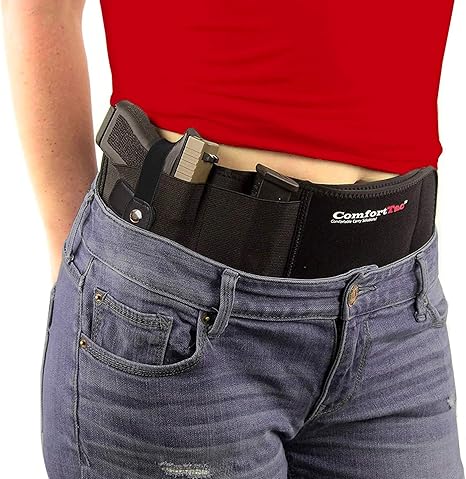
- Right or left hand draw
- Hard plastic trigger guard
- Extra mag pouch
- Fits up to 54" belly
View Price on Amazon
2. Pick a position kids can’t reach
Toddlers on your hip are at grip height for strong-side carry. Many parents find appendix carry, or a strong-side position slightly behind the hip, keeps the gun away from the side they hold a child on. Wear your setup at home with an unloaded gun while you pick up and carry your child to see where little hands land.
3. Lock it up whenever it’s off your body

At home, the gun should be on you or locked up. A quick-access safe at the bedside or a mounted lockbox in the car lets you secure it quickly without leaving it on a dresser or in a glove box. Keypad and biometric safes open fast for you but not for kids; teach older children that the safe is off-limits, and never share the code. See our bedside gun safe comparison or browse Vaultek safes.

4. Plan the car routine
Buckling kids into car seats means bending, twisting and leaning into the back seat, which can expose or shift your holster. Practice the routine with an unloaded gun. If you need to secure the gun in the car (for example before entering a school or other prohibited place), use a mounted, locked vehicle safe rather than the glove box or console. Never leave a gun visible or unsecured in a car.
5. Know your rules for school pickup and kid places
Schools, daycares, some playgrounds, and many children’s activity venues are restricted under federal or state law, or by property owners. Rules differ by state, so learn where you cannot carry before you build a routine. Our constitutional carry and reciprocity guides link to state rules.
6. Practice in mom clothes
Practice drawing (with an unloaded gun, no ammo in the room) in the clothes you actually wear: leggings, nursing tops, sweaters and jackets. Practice one-handed, since you may be holding a child or a stroller. Dry practice at home and occasional range trips keep your skills current; a training aid such as the MantisX can add structure to dry practice.
Classes help too. Women-only and parent-focused courses exist in many areas; the USCCA lists women’s handgun fundamentals courses. See also our concealed carry for women guide.
7. Teach your kids early

Age-appropriate safety lessons protect kids at home and at friends’ houses. For young children, the common message is: if you see a gun, stop, don’t touch it, leave the area and tell an adult. Older kids can learn why guns are not toys, the difference between real and pretend guns, and, if you choose, supervised safety training. Project ChildSafe offers free parent resources. Model safe handling every time they see you with a gun.
8. Handle restrooms and changing rooms

Restrooms are where guns get left behind. Keep the gun on your body: a belly band or a holster that stays on your belt is easier than removing anything. If you must lower pants with a waistband holster, keep the belt buckled and the holster in place, and never hang a gun or a gun purse on a stall hook. Family restrooms give more room to manage kids and gear.
9. Adjust for pregnancy, postpartum and body changes
Pregnancy and postpartum change what is comfortable. Appendix carry often stops working as the belly grows; many women move to a strong-side belly band, a holster with more cant, or a dedicated carry bag kept on the body. Nursing may require a position that leaves the chest clear. Each time you change setups, practice the draw again with an unloaded gun, and talk with your doctor about range noise and lead exposure during pregnancy.

10. Build backup options and support

There will be places you cannot carry. Awareness and avoidance come first; our situational awareness guide covers the basics. Non-lethal tools such as pepper spray are legal in most places where guns are not, but check local rules. Many moms also find support and range time through groups such as Armed Women of America, The Well Armed Woman and A Girl & A Gun.
Legal protection: a self-defense incident can bring legal costs even when you acted lawfully. Compare plans in our concealed carry insurance guide.
Related reading: Situational Awareness: 4 Skills Every Concealed Carrier Needs
Concealed Carry for Moms FAQ
What is the best way for moms to carry?
On-body carry in a holster with full trigger coverage — commonly appendix, strong-side IWB or a belly band — keeps the gun under control while you lift and hold children.
Is purse or diaper bag carry safe?
Only in a dedicated holster compartment that stays on you. Bags get set down, left in carts and opened by kids.
How should I store my gun at home with kids?
Locked whenever it is not on your body, in a quick-access safe or lockbox, with ammunition secured.
When should I teach my kids about gun safety?
Early and in age-appropriate terms, such as “stop, don’t touch, leave the area and tell an adult.” Project ChildSafe has free resources.
Conclusion
For moms, carrying safely comes down to control: the gun stays on your body in a holster that covers the trigger, or it is locked up. Choose a position that works while you hold kids, plan your car and restroom routines, practice in your everyday clothes, and teach your children what to do if they ever find a gun.


