How to Choose the Best Bullet Weight for Concealed Carry
Choosing the right bullet weight for concealed carry is almost as important as selecting your firearm. The weight of your bullet affects recoil, accuracy, penetration, and stopping power—factors that matter in a self-defense situation. But with so many options, how do you know which one is best?
Lighter bullets travel faster, but heavier bullets hit harder. Some perform better in short-barreled concealed carry pistols, while others offer deeper penetration through barriers. The key is finding the right balance between performance and control based on your caliber, gun, and personal needs.
In this guide, I’ll break down how bullet weight impacts self-defense effectiveness, compare popular options across different calibers, and help you decide which is best for your concealed carry setup.
Read Best Places to Buy Ammo Online
Understanding Bullet Weight
Bullet weight is measured in grains (gr), with common options for concealed carry ranging from 90gr to 230gr, depending on the caliber. This weight refers only to the projectile itself, not the entire cartridge. The choice between a lighter or heavier bullet can impact everything from recoil to terminal performance.
How Bullet Weight Affects Performance
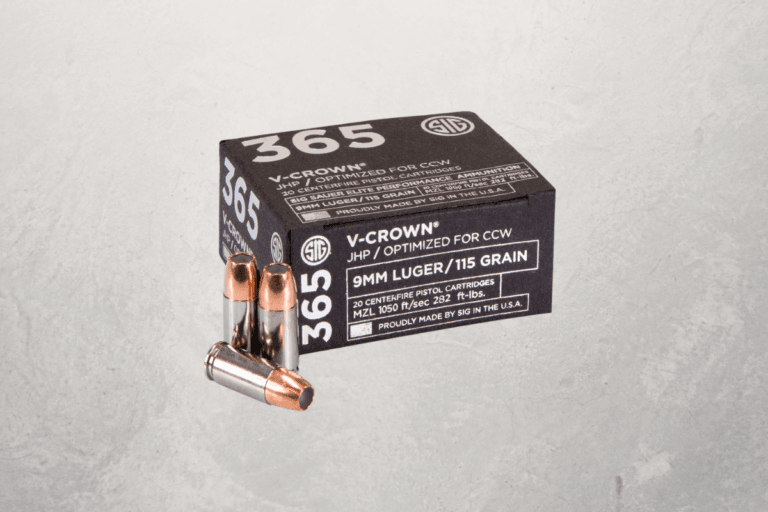
- Velocity: Lighter bullets (e.g., 115gr in 9mm) typically travel faster, which can lead to more reliable expansion in hollow points.
- Penetration: Heavier bullets (e.g., 147gr in 9mm) often penetrate deeper, making them ideal for barrier penetration or winter carry.
- Recoil: Lighter bullets generally produce less felt recoil, while heavier bullets can feel softer but have more overall energy.
- Accuracy: Some guns shoot specific bullet weights more accurately due to barrel twist rate and overall design.
While the difference between bullet weights may seem minor, it can have a big impact on how a round performs in a defensive situation. The key is understanding how these factors apply to your concealed carry firearm and needs.
Bullet Weight by Caliber

Different calibers offer a range of bullet weights, each with its own strengths and weaknesses. The right choice depends on factors like firearm size, recoil sensitivity, and the intended role of your concealed carry setup. Below is a breakdown of common calibers and their typical bullet weight options.
Bullet Weight Comparison Table
| Caliber | Light Weight | Medium Weight | Heavy Weight |
|---|---|---|---|
| 9mm Luger | 115gr | 124gr | 147gr |
| .380 ACP | 90gr | 95gr | 100gr+ |
| .40 S&W | 155gr | 165gr | 180gr |
| .45 ACP | 185gr | 200gr | 230gr |
| .357 SIG | 125gr | — | 147gr |
| 10mm Auto | 155gr | 180gr | 200gr |
Bullet Calibers and Their Weight
Now that we’ve covered the various calibers and their typical bullet weights, it’s important to understand how these choices impact your concealed carry setup.
Each caliber has its own strengths and weaknesses, and selecting the right bullet weight can significantly affect your gun’s performance, accuracy, and stopping power.
9mm Luger
One of the most popular self-defense calibers, 9mm offers a balance of capacity, recoil control, and effectiveness.
- 115gr: Higher velocity, less penetration, snappier recoil.
- 124gr: A middle-ground option with solid expansion and manageable recoil.
- 147gr: Heavier, subsonic, deeper penetration with softer recoil impulse.
.380 ACP
Often used in small pocket pistols, .380 ACP is lightweight and easy to carry, but bullet weight plays a key role in performance.
- 90gr – 95gr: Standard weight, offering a balance of velocity and expansion.
- 100gr+: Some defensive loads push into heavier territory for deeper penetration.
.40 S&W
A higher-pressure round with more recoil, .40 S&W offers heavier bullet options that maximize stopping power.
- 155gr – 165gr: Faster velocity, good expansion but slightly less penetration.
- 180gr: Deeper penetration with a softer recoil impulse.
.45 ACP
Known for its stopping power, .45 ACP relies on heavy bullets to create large wound channels.
- 185gr: Lighter option with more velocity and faster expansion.
- 200gr: A balance of speed and penetration.
- 230gr: Standard heavyweight option with deep penetration and controlled recoil.
.357 SIG
Designed for high velocity and deep penetration, .357 SIG bullets are typically on the lighter side.
- 125gr: Standard defensive load, offering speed and expansion.
- 147gr: Less common but provides greater penetration.
10mm Auto
A powerful round with wide bullet weight options, 10mm can be adjusted for both self-defense and hunting.
- 155gr – 165gr: Lighter and faster, good for defensive use.
- 180gr – 200gr: Deeper penetration with heavier recoil.
Bullet weight selection depends on your firearm, preferred recoil impulse, and defensive needs. Testing different weights in your specific gun is the best way to find what works for you.
Considerations for Lighter Bullet Weights
Lighter bullets are typically designed for higher velocity and faster expansion, making them a popular choice for self-defense. They offer several advantages, but they also come with trade-offs.
Pros and Cons of Light Weight Bullets
Lighter bullets offer distinct advantages in self-defense scenarios, but they also come with drawbacks. Understanding the pros and cons can help you decide if a lighter bullet weight is the right choice for your concealed carry setup.
Pros of Lighter Bullets (e.g., 115gr in 9mm, 90gr in .380 ACP, 155gr in .40 S&W)
- Higher Velocity: Lighter bullets travel faster, which can improve hollow point expansion and energy transfer.
- Flatter Trajectory: The increased speed results in less bullet drop, improving accuracy at longer distances.
- Reduced Over-Penetration Risk: Faster expansion means the bullet is more likely to stop in the target rather than passing through.
- Less Felt Recoil (in Some Cases): In smaller calibers, lighter bullets produce less recoil, making follow-up shots easier.
Cons of Lighter Bullets
- Less Penetration: Lighter bullets may struggle to reach vital organs, especially if encountering barriers like heavy clothing.
- More Muzzle Flip in Some Guns: While recoil is generally lower, the increased velocity can cause a sharper “snap” in compact pistols.
- More Reliant on Expansion: If a hollow point fails to expand, a lighter bullet may lack sufficient stopping power.
When to Choose a Lighter Bullet Weight
- If you carry a compact or subcompact pistol, as lighter bullets may reduce recoil and improve control.
- If you want faster expansion and less risk of over-penetration, especially in urban environments.
- If you prefer a faster-shooting round with less bullet drop for improved accuracy.
Lighter bullets work well for concealed carry, but they require reliable expansion to be truly effective. Testing your chosen ammo in your firearm is crucial to ensure consistent performance.
Considerations for Heavier Bullet Weights
Heavier bullets are designed for deeper penetration and controlled expansion, making them a strong choice for self-defense. While they move slower than lighter bullets, they deliver more momentum and can be highly effective in real-world scenarios.
Pros and Cons of Heavy Weight Bullets
Heavier bullets offer increased stopping power and deeper penetration, making them ideal for certain defensive situations. However, they come with their own set of trade-offs, including reduced velocity and potential recoil concerns.
Pros of Heavier Bullets (e.g., 147gr in 9mm, 180gr in .40 S&W, 230gr in .45 ACP)
- Deeper Penetration: Heavier bullets maintain momentum better, increasing the likelihood of reaching vital organs.
- Better Barrier Penetration: They perform well against heavy clothing, auto glass, and other obstacles.
- Softer Recoil Impulse: While they generate more overall recoil, it’s often a smoother push rather than a sharp snap.
- Effective in Suppressed Firearms: Heavier bullets, especially subsonic loads, pair well with suppressors by reducing noise and muzzle flash.
Cons of Heavier Bullets
- Lower Velocity: Slower speeds can reduce hollow point expansion, especially if the bullet doesn’t reach its ideal velocity.
- More Bullet Drop: A heavier projectile has a more curved trajectory, which may affect long-range accuracy.
- Increased Felt Recoil in Some Calibers: While the recoil impulse may feel softer, the overall force can be greater, especially in lighter pistols.
When to Choose a Heavier Bullet Weight
- If you prioritize penetration over speed, especially for winter carry when thick clothing may be a factor.
- If you use a suppressed firearm, since heavier bullets are more commonly subsonic.
- If your firearm shoots heavier bullets more accurately, as some barrels perform better with certain weights.
Heavier bullets provide excellent stopping power and penetration, but they require careful ammo selection to ensure reliable expansion. Testing your chosen load in your carry gun is essential to verify its effectiveness.
Real-World Performance

When choosing a bullet weight for concealed carry, real-world performance is key. Ballistic gel tests are commonly used to simulate how a bullet behaves upon impact with soft tissue, offering insight into its expansion, penetration, and overall effectiveness.
While these tests aren’t perfect representations of real-world scenarios, they provide valuable data on how different bullet weights perform.
Ballistic Gel Test Data Comparison
The following table shows ballistic gel test results for various bullet weights across popular calibers. The data compares factors like penetration depth and expansion to highlight the effectiveness of lighter vs. heavier bullets.
| Caliber | Bullet Weight | Penetration | Expansion |
|---|---|---|---|
| 9mm Luger | 115gr | 12-14 inches | 0.55-0.70 inches |
| 9mm Luger | 124gr | 13-15 inches | 0.65-0.75 inches |
| 9mm Luger | 147gr | 14-16 inches | 0.70-0.80 inches |
| .40 S&W | 155gr | 14-16 inches | 0.60-0.75 inches |
| .40 S&W | 180gr | 16-18 inches | 0.70-0.80 inches |
| .45 ACP | 185gr | 14-16 inches | 0.75-0.85 inches |
| .45 ACP | 230gr | 16-18 inches | 0.80-0.90 inches |
| .380 ACP | 90gr | 10-12 inches | 0.50-0.60 inches |
| .380 ACP | 95gr | 11-13 inches | 0.55-0.65 inches |
Analysis of the Data
- Penetration: Heavier bullets tend to penetrate deeper, with .45 ACP and .40 S&W rounds often reaching the deeper end of the scale. For comparison, lighter bullets like 115gr 9mm or 90gr .380 ACP tend to penetrate less, which could be beneficial in reducing the risk of over-penetration.
- Expansion: Heavier bullets generally expand more significantly, especially in larger calibers like .45 ACP, creating larger wound channels. Lighter bullets, while fast, may not expand as reliably, especially if they lack the proper velocity or bullet design.
- Performance Balance: The key takeaway is that a balance of expansion and penetration is crucial for defensive ammo. A bullet that expands too much without sufficient penetration may fail to reach critical organs, while one that penetrates too deeply may pose a risk to bystanders or unintended targets.
Ballistic gel tests offer a good starting point, but remember that personal testing in your own firearm is the best way to assess ammo performance for your concealed carry needs.
Testing Ammo in Your Firearm
While understanding the general performance of bullet weights is important, nothing beats testing your ammo in your specific firearm. Even though a bullet may perform well in ballistic gel tests, how it performs in your concealed carry gun can differ due to factors like barrel length, recoil management, and feeding reliability.
Why Testing Is Crucial
- Feeding Reliability: Not all ammunition feeds reliably in every firearm. Some guns might struggle with certain bullet designs or weights, especially in compact or subcompact models.
- Accuracy: Your firearm may show a preference for certain bullet weights. Testing helps you identify which load is the most accurate, leading to better performance in real-world situations.
- Recoil Management: The recoil generated by different bullet weights can vary significantly. Testing lets you find the bullet weight that you can control best, ensuring fast and accurate follow-up shots.
- Expansion and Penetration: Testing the ammo in your firearm gives you insight into how well it expands and penetrates when fired from your gun, which is crucial for choosing a load that will perform effectively in self-defense situations.
How to Test Ammo Effectively
- Shoot a Variety of Weights: When testing, try multiple bullet weights to see how they perform in your gun. This includes light, medium, and heavy options to get a feel for what works best.
- Test Different Bullet Designs: Bullet design also affects performance, so it’s a good idea to test hollow points, bonded bullets, and other designs to see which delivers the most consistent and reliable results.
- Use Ballistic Gel or Similar Targets: If possible, use ballistic gel or similar test media to check the expansion and penetration of the rounds you’re testing. This provides tangible data for comparison.
- Take Notes: Keep a log of your testing results, including things like accuracy, penetration, and any issues with feeding or reliability. This will help you make an informed decision when choosing the right ammunition for everyday carry.
By testing your ammunition in your actual firearm, you ensure that you’re carrying a round that’s reliable, accurate, and effective in the real world. Don’t skip this step—your safety depends on it.
Conclusion
Read Best Self Defense Ammo For Concealed Carry
Choosing the best bullet weight for concealed carry ultimately comes down to your personal needs and how your firearm performs with different ammunition. There’s no one-size-fits-all answer, but understanding the trade-offs between lighter and heavier bullets can help guide your decision.
- Lighter bullets excel in speed, expansion, and manageable recoil, making them ideal for those who prioritize quick follow-up shots and less over-penetration.
- Heavier bullets offer deeper penetration and better performance through barriers, making them a strong choice when you need a round that can reliably reach vital organs, especially in tougher scenarios.
Regardless of your choice, it’s essential to test your selected ammunition in your firearm. Real-world performance can differ significantly from ballistic gel tests, and the right load will depend on how it feeds, performs, and handles recoil in your gun.
By considering the caliber, bullet weight, and your personal preferences, you’ll be better equipped to make an informed choice that ensures you have the most effective self-defense ammo in your concealed carry firearm. Remember, your safety is the priority—so take the time to test and carry the best option for you.
If you want to learn more about concealed carry, check out our Ultimate Guide to Concealed Carry where we look at all the steps you can take to improve your experience.